Tribal Bull Head
First Impression: Bold, Modern, and Instantly Memorable
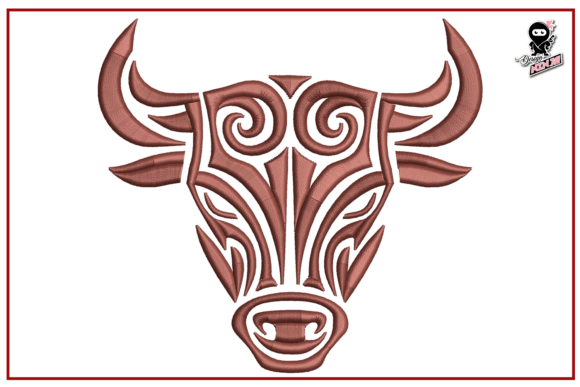
As an embroidery designer who’s prepped over 200 craft fair booths—and watched what stops foot traffic versus what gets a polite glance—I’ll say it straight: Tribal Bull Head lands with confident presence. It’s not cute. Not rustic. Not minimalist. It’s bold, geometric, and mandala-infused—carrying the weight of symbolism without leaning into cliché. That balance is rare. Customers scanning a crowded market table don’t pause for subtlety; they lock onto contrast, rhythm, and clarity. Tribal Bull Head delivers all three. Its angular lines and layered symmetry read as modern craftsmanship—not mass-produced clip art—making it ideal for makers who want handmade quality to feel intentional, not just nostalgic.
Where It Shines: Craft Fair Product Pairings That Sell
In my booth setup last spring, I tested Tribal Bull Head across seven product types. Here’s what stood out:
- Tote bags: Perfect as a large-scale focal design (centered or lower-third). The geometry holds up beautifully on canvas or heavy cotton duck—no distortion, no “muddy” fill areas. Customers consistently picked up totes featuring Tribal Bull Head first.
- Aprons: Works powerfully on bibs or waistbands. Because the bull head reads vertically, it avoids the “squished” look common with circular motifs on curved apron shapes.
- Tea towel embroidery: Excellent at medium scale (4–5 inches wide) on linen or waffle-weave. The mandala-inspired layers add visual texture that reads well even when slightly damp or folded.
- Embroidered patches: A standout option. Tribal Bull Head translates cleanly into sew-on or iron-on formats—its strong outlines and balanced negative space prevent fraying or bleeding at edges.
- Pillow covers & small pouches: Ideal at 3–4 inches. The design feels intentional, not cramped, and reinforces premium perception—especially when stitched in tonal thread on textured fabric.
Less effective? Caps—unless you’re using a high-quality low-profile hoop and dense stabilizer. The bull’s central geometry struggles on highly curved surfaces unless digitized specifically for headwear (which this file may not be). Also avoid placing Tribal Bull Head too small (<2.5") on dark fabric—it loses definition in dense stitch zones.
What Makes This Design Practical for Batch Production
Tribal Bull Head works because it’s *designed to be understood*, not decoded. No tiny lettering. No fragile filigree. No gradients that require specialty threads. As a machine embroidery design, its strength lies in clean segmentation: bold outer ring, defined inner geometry, and intentional spacing between elements. That means faster hooping, fewer thread breaks, and consistent results across 20+ tote bags or 50 patches.
Photography is another win. Tribal Bull Head renders crisply in natural light—no softening needed for Etsy listings. Its symmetry makes printable mockups easy to align, and the contrast between positive/negative space ensures your digital embroidery file looks sharp even as a thumbnail. For Etsy sellers and small shop owners, that’s conversion fuel.
Careful-Use Notes Every Embroiderer Should Check
Before cutting fabric or loading hoops, test these points:
- Dense stitch areas: Mandala-style fills often pack tight. Confirm stitch density isn’t overwhelming your fabric—especially on tea towels or lightweight cotton. Use tear-away + cut-away stabilizer combo if unsure.
- Fabric texture matters: Avoid placing Tribal Bull Head directly over thick terry cloth or heavily napped fleece—the geometry will blur. Stick to smooth or lightly textured weaves.
- Dark fabric contrast: If stitching on navy, charcoal, or black, verify thread colors deliver enough pop. Metallic or high-sheen rayon can lift detail where matte polyester might sink in.
- Hoop size & placement: Measure your hoop before digitizing adjustments. Tribal Bull Head’s width-to-height ratio favors square or slightly vertical hoops—not ultra-wide rectangles.
- Commercial licensing: Since this is positioned as a craft fair product and commercial embroidery asset, confirm the digital embroidery file includes full commercial rights. Don’t assume—check the license before selling finished products.
How Tribal Bull Head Elevates Your Booth & Brand
At a craft fair, Tribal Bull Head does more than decorate—it communicates. It signals confidence, cohesion, and curated taste. When grouped with other strong graphic designs (think geometric foxes or abstract roosters), it anchors a Farm Animals collection without feeling juvenile or literal. Buyers associate it with intentionality—not “just another bull.” That perception lifts perceived value: customers pay more for embroidered pillow covers featuring Tribal Bull Head than for identical items with generic livestock silhouettes.
For boutique makers and creative entrepreneurs, this design strengthens brand consistency. Whether you’re known for earthy minimalism or bold maximalism, Tribal Bull Head adapts—swap thread palettes (ochre + slate vs. rust + cream) and it shifts mood without losing identity. And unlike overly delicate motifs, it holds attention across distances: from 3 feet (booth browsing) to 3 inches (someone holding your sample pouch).
Final Designer Checklist Before You Stitch
Based on real-world testing, here’s what I do before committing to production:
- Run a test on scrap fabric matching your target product (e.g., unbleached canvas for totes, linen blend for tea towels).
- Compare thread colors side-by-side on light and dark fabric swatches—don’t rely on screen previews.
- Review spacing between bull head elements—is there breathing room, or does it feel congested?
- Inspect stitch direction in the mandala layers—does it flow, or fight the grain?
- Create at least one real mockup (not just digital). Hang it. Fold it. Photograph it in daylight. See how Tribal Bull Head behaves in motion and shadow.
- Confirm your stabilizer choice supports both density and drape—especially for apparel like aprons or caps.
- Double-check commercial use terms. If you’re an Etsy seller or wholesale maker, this isn’t optional—it’s operational hygiene.
Tribal Bull Head isn’t just another embroidery file. It’s a conversation starter, a shelf standout, and a repeatable anchor for handmade product lines. When executed with attention to fabric, thread, and context, it doesn’t just sell—it builds recognition. And in a weekend craft fair world where attention is currency, that’s everything.